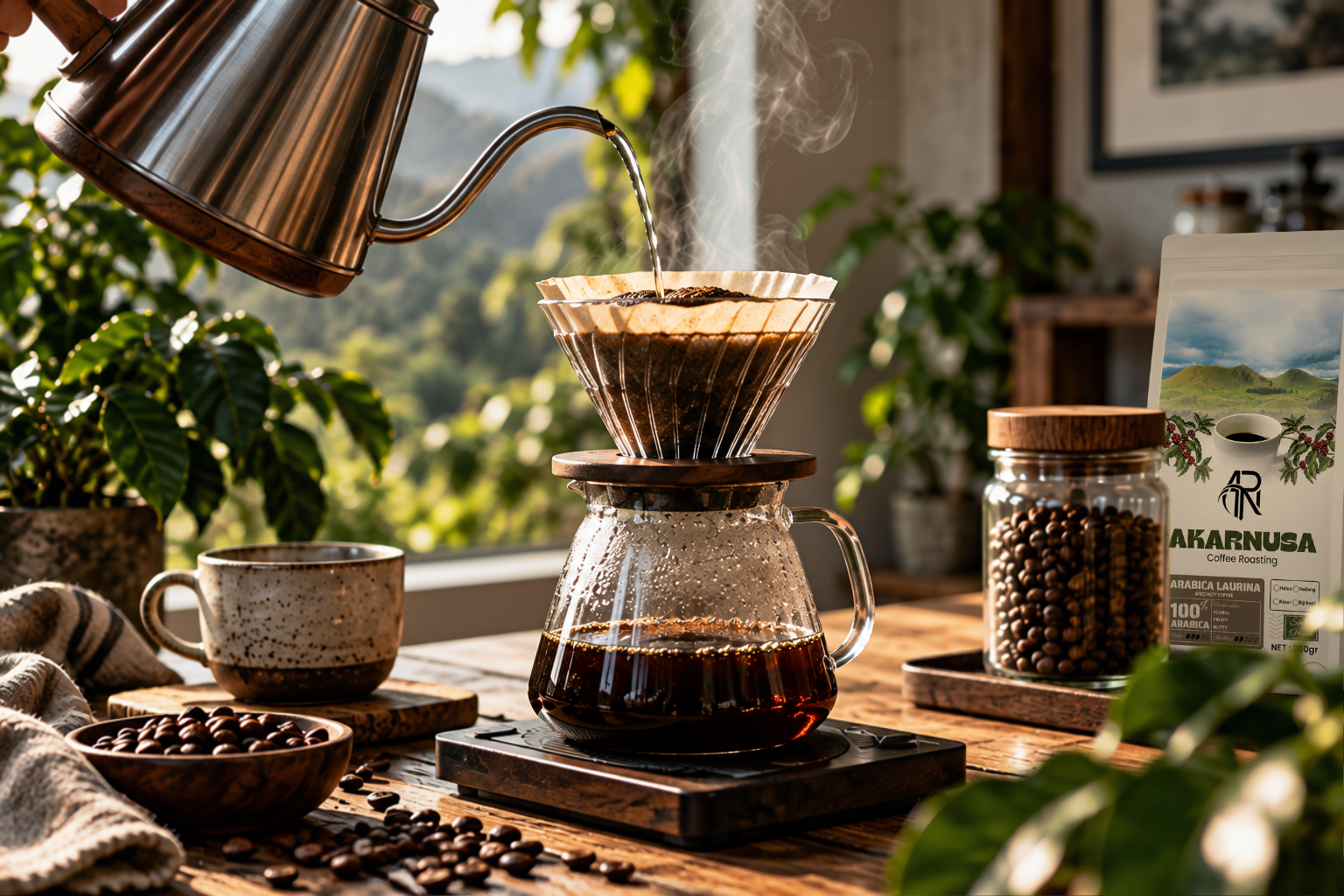
Brewing a better cup at Home
Simple steps, meaningful results – Make café-quality coffee in your own space
Great coffee at home does not have to be complicated. You do not need a professional espresso machine, a kitchen full of equipment, or a perfectly calibrated recipe to enjoy a better cup. What matters more is understanding a few simple variables and learning how they work together.
From the coffee you choose to the way you grind it, from the water you use to the way you pour it, every decision influences what eventually ends up in your cup. Brewing is essentially the process of helping water draw flavor and aroma from roasted coffee, and small changes in that process can make a noticeable difference.
The good news is that you do not need to master everything at once. Start with good coffee, keep your brewing consistent, taste the result, and make one adjustment at a time. Once you understand the basics, making better coffee becomes less about following a complicated recipe and more about learning what your coffee needs.
Start With Good Coffee
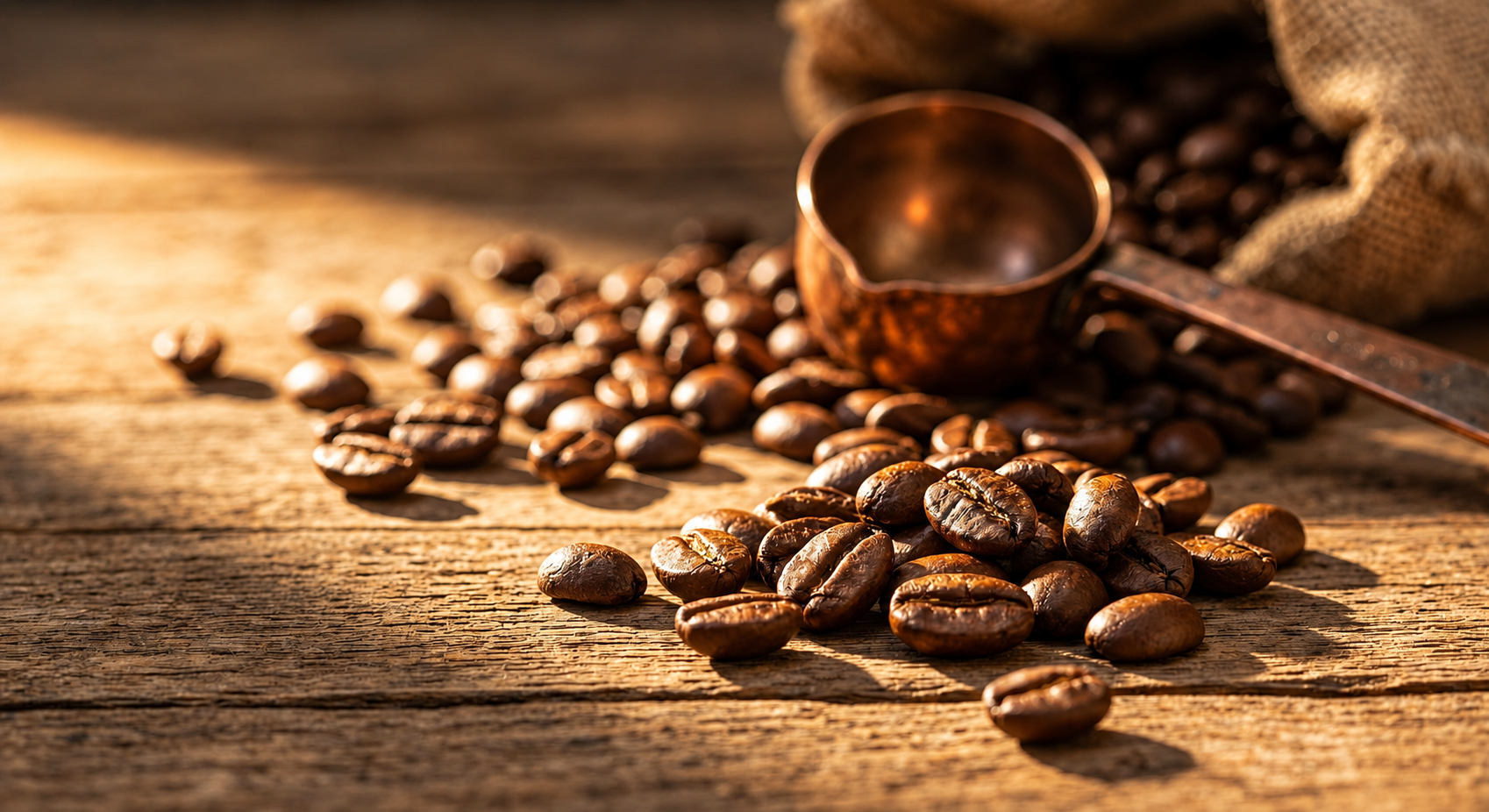
A better cup always starts with the coffee itself.
Every coffee has its own character, shaped by factors such as its origin, variety, growing environment, processing method, and roast. Brewing does not create those characteristics; it determines how they are expressed in the final cup. This is why the same brewing method can produce very different results when used with different coffees.
Freshness also matters. Roasted coffee continues to change after roasting, and exposure to oxygen, moisture, heat, and light can gradually affect its aroma and flavor. Keeping whole beans properly sealed and protected from unnecessary exposure helps preserve their character for longer.
Whenever possible, grind your beans shortly before brewing. Whole beans provide a more stable starting point, while grinding increases the coffee’s exposed surface area and allows extraction to happen much more quickly.
This is also where choosing the right coffee for your taste becomes important. Some coffees naturally show brighter acidity and floral or fruity characteristics, while others may lean toward chocolate, caramel, nuts, or deeper roasted notes. There is no reason to make every coffee taste the same.
A good brewing method should help reveal what makes the coffee interesting in the first place.
Get the Grind Right
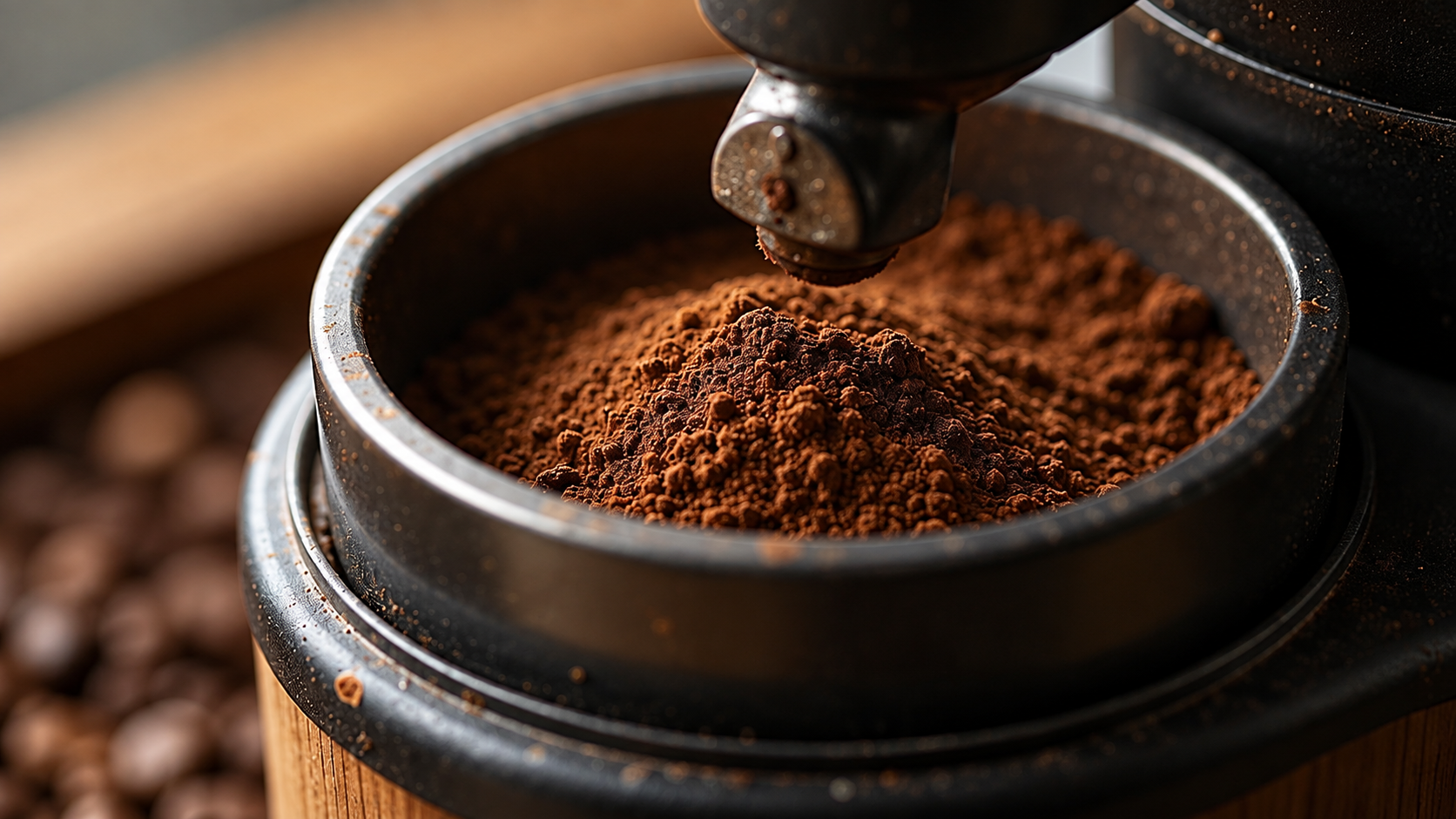
Grinding is one of the most important variables you can control at home because it determines how easily water interacts with the coffee grounds.
A finer grind creates more surface area for water to contact, while a coarser grind generally allows water to move through the coffee more easily. The right balance depends on the brewing method, the coffee, and the other variables involved. The Specialty Coffee Association treats grinding, brewing, filtration, temperature, and extraction as fundamental parts of brewing practice.
Instead of looking for one universally correct grind size, pay attention to the cup.
If your coffee tastes noticeably sharp, sour, thin, or underdeveloped, the coffee may not have extracted enough. A slightly finer grind can increase the interaction between water and coffee and may help bring more flavor into the cup.
On the other hand, if the coffee tastes excessively bitter, harsh, or drying, you may be extracting too much or extracting unevenly. A slightly coarser grind can be one way to adjust the result.
The important part is not simply knowing which direction to turn your grinder. It is learning to make controlled changes.
Keep your coffee dose and water amount the same, change the grind slightly, and brew again. That simple comparison will teach you far more than changing five variables at once.
Water & Temperature Matter
Coffee is mostly water once it reaches your cup, so the water itself deserves more attention than it usually gets.
Water quality and mineral composition can influence how coffee compounds are extracted and how acidity is perceived. The Specialty Coffee Association has specifically examined the relationship between water chemistry, alkalinity, hardness, brewing ratio, and coffee extraction.
You do not need to become a water chemist to apply this at home. Start with water that tastes clean and pleasant on its own. If your drinking water has a strong taste or odor, those characteristics can become noticeable in the coffee as well.
Temperature is another important part of the process, but it is often treated too simply.
Hotter does not automatically mean better.
Research from UC Davis tested drip coffee brewed at 87°C, 90°C, and 93°C while controlling other variables so that brew strength and extraction could be compared. The researchers found that, when those final extraction characteristics were held constant, brew temperature within that range had little appreciable effect on the sensory profile.
That does not mean temperature is irrelevant. Temperature affects how quickly extraction happens; it simply means that temperature should be considered together with grind size, brewing time, flow, ratio, and extraction rather than treated as a magic number. The Specialty Coffee Association’s discussion of the same research makes the point clearly: temperature influences the route of extraction, while the final extraction and brew strength strongly influence what ends up in the cup.
So rather than obsessing over a single “perfect” temperature, aim for consistency and pay attention to the result.
Find Your Balance
Once your coffee, grind, water, and temperature are under control, the next step is finding the balance that works for your cup.
One of the easiest ways to make brewing more repeatable is to measure coffee and water by weight. A scale may seem unnecessary at first, but it removes much of the guesswork. Instead of using an approximate number of spoonfuls, you can repeat the same recipe and understand exactly what changed when the next cup tastes different.
The coffee-to-water ratio is one of the fundamental variables used in brewing science and industry practice. The SCA discusses brewing ratios in terms such as grams of ground coffee per amount of brewing water, with 60 g/L or approximately 1:16.7 water-to-coffee as one commonly referenced ratio for filter brewing.
That does not mean every coffee should be brewed at exactly that ratio.
Your preferred strength may be different, and different coffees and brewing methods can respond differently to the same recipe. Research from UC Davis involving 118 coffee consumers found that preferences for black coffee were spread across a broad range of brew strengths and extraction yields, rather than concentrating around one universal ideal.
That is why brewing should be treated as a starting point, not a rigid formula.
If the coffee tastes too weak, you might adjust the ratio to use more coffee relative to water. If it feels too intense, you can move in the opposite direction. If the strength feels right but the flavor is unbalanced, the grind or brewing process may need attention instead.
The goal is not to chase a number.
The goal is to find the point where the coffee tastes balanced, expressive, and enjoyable to you.
A Simple Pour-Over Starting Point
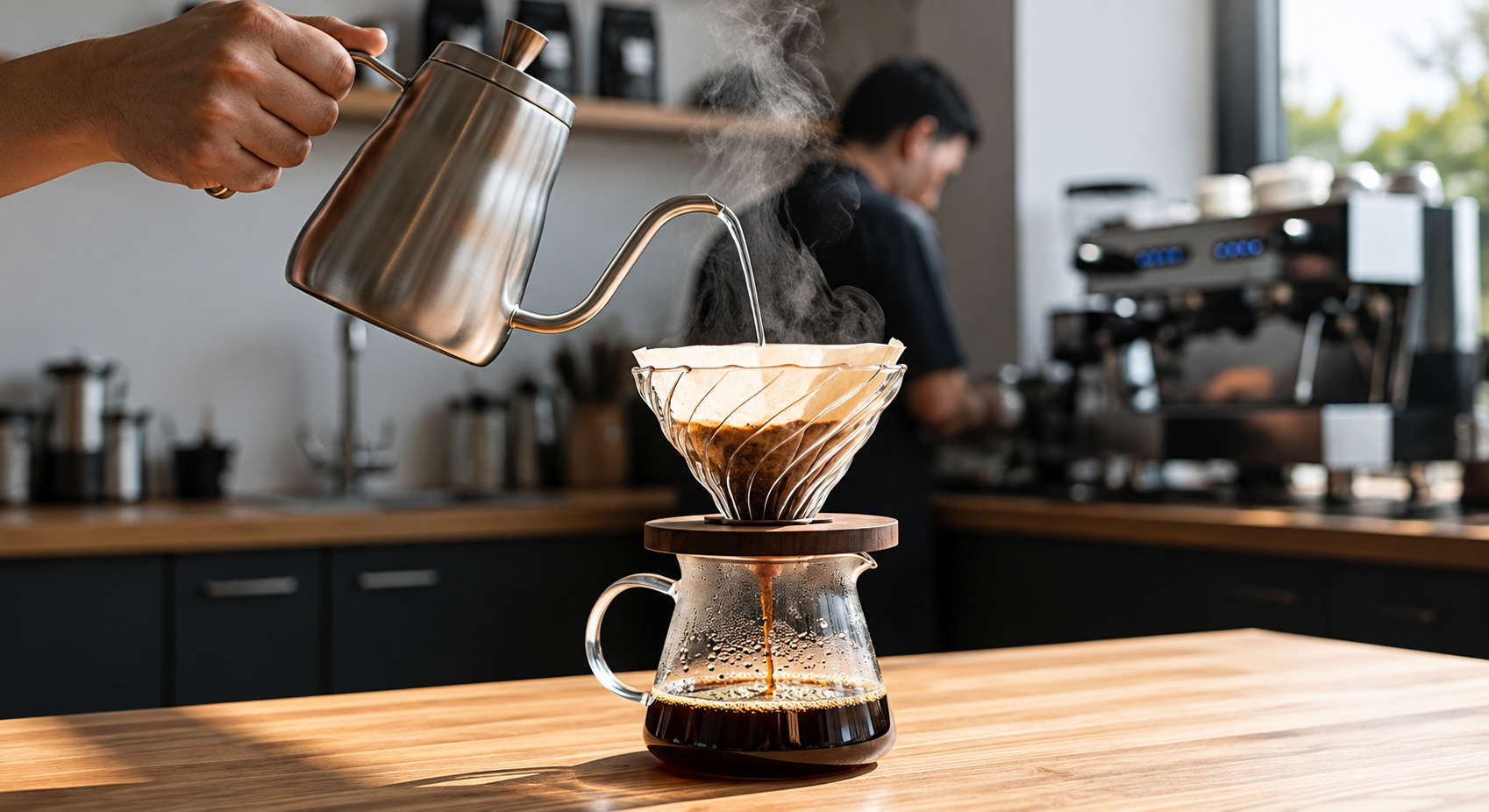
If you are brewing a pour-over at home, start with a simple and repeatable recipe rather than trying to control every possible variable.
Try 15 grams of coffee with 250 grams of water, giving you a ratio of approximately 1:16.7. Use freshly ground coffee, clean water, and a consistent pour-over method. For temperature, you can begin around the low-90°C range and adjust according to the coffee and your taste.
The exact grind setting will depend on your grinder and brewer, so treat the first brew as a reference point rather than a final answer.
Pour steadily and avoid making the process unnecessarily complicated. Once the brew is finished, taste it before changing anything.
If the cup tastes balanced, you already have a recipe worth keeping.
If it tastes sharp or underdeveloped, try a slightly finer grind or allow the brewing process to run a little longer. If it tastes harsh or overly drying, try moving slightly coarser. If the flavor itself is pleasant but the coffee feels too weak or too strong, adjust the coffee-to-water ratio.
Most importantly, change one variable at a time.
That is how you turn brewing from guesswork into a process you can actually learn from.
Taste, Adjust, Repeat
The most useful brewing skill is not memorizing recipes. It is learning how to taste your coffee and understand what it is telling you.
A cup that tastes bright and lively is not necessarily under-extracted, just as a darker, more intense cup is not automatically over-extracted. Coffee naturally varies, and personal preference varies with it. Recent UC Davis research has continued to show that consumer liking is influenced by combinations of brew strength, extraction, acidity, flavor intensity, and other sensory characteristics rather than by one universal definition of the perfect cup.
So taste with curiosity.
Ask yourself: Is the coffee balanced? Is the acidity pleasant? Does it have enough sweetness and body? Does the flavor feel clear, or does it feel harsh? Is the finish enjoyable?
Then make one small adjustment and brew again.
Over time, you will begin to recognize patterns. You will understand how your grinder behaves, how your favorite coffee responds to different brewing conditions, and which recipe brings out the characteristics you enjoy most.
And that is ultimately what makes brewing at home rewarding.
There is no single recipe that can make every coffee better for every person. There is only a process of understanding the coffee, controlling the variables you can, and discovering what works best for you.
Better coffee does not always require more complexity.
Sometimes, it simply requires better coffee, a little consistency, and the patience to pay attention.
From the first grind to the final sip, every cup is an opportunity to learn something new about the coffee you love.
At AKARNUSA, we believe a good cup of coffee starts long before the first pour. It begins with carefully selected Indonesian coffee, its origin, and the character that makes every bean worth discovering.
Our coffees are made to be enjoyed in your everyday moments whether you’re starting the morning with a quiet pour-over or taking a few minutes to slow down during a busy day.
Discover Indonesian coffee, find your favorite, and make every cup a little more meaningful.