
The Story Behind Gayo’s Extraordinary Flavor
From the Highlands of Aceh to Your Everyday Cup
High in the mountains of Aceh lies the Gayo highlands, a region where coffee has become deeply connected to the landscape, communities, and everyday life. For more than a century, Arabica coffee has been cultivated in this part of Indonesia, with its development in the Gayo highlands tracing back to around 1908. Today, Gayo coffee is closely associated with the highland areas of Aceh Tengah, Bener Meriah, and Gayo Lues.
The landscape matters. Gayo coffee grows in a highland environment suited to Arabica cultivation, where elevation, climate, soil, and farming practices come together to shape the character of the coffee. Indonesian agricultural sources describe Arabica as particularly well suited to higher elevations, while government documentation identifies Gayo as one of Indonesia’s established specialty coffee origins.
But the story of Gayo is not simply a story about geography.
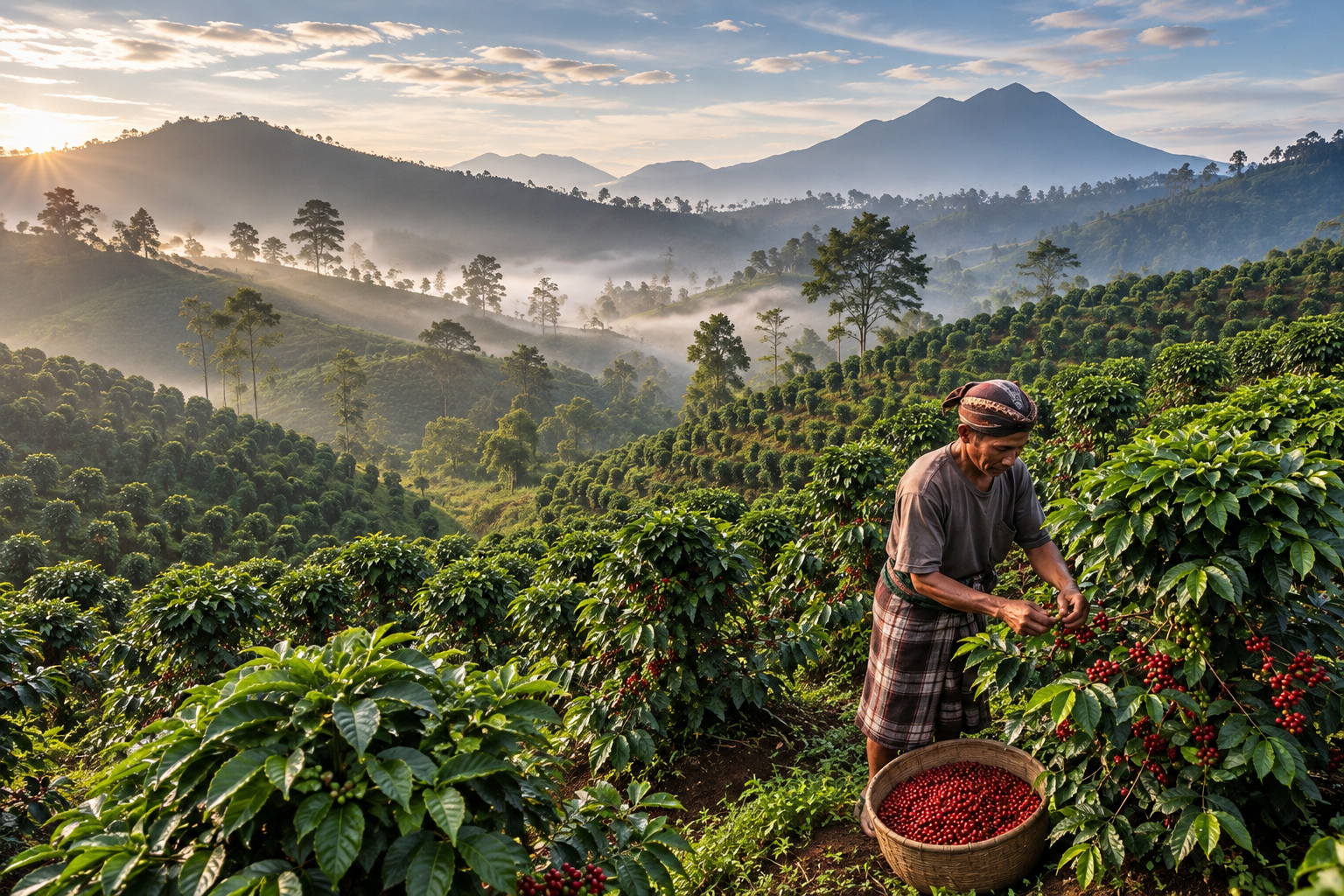
It is also a story about people who have continued to cultivate coffee across generations. Following Indonesia’s independence, coffee cultivation expanded among local communities in the Gayo highlands, gradually becoming an important agricultural commodity for the region. Over time, different varieties and cultivation practices developed across the area, contributing to the diversity found in Gayo coffee today.
A Name Protected by Its Place
The connection between Gayo coffee and its origin is more than a marketing story. Kopi Arabika Gayo is registered as a Geographical Indication in Indonesia, a form of protection that recognizes products whose characteristics, reputation, or qualities are connected to a particular geographical area. The registered Gayo GI covers coffee originating from Aceh, and the Ministry of Law’s current GI records identify Kopi Arabika Gayo under registration IG.00.2009.000003.
That distinction matters.
When a coffee carries the name Gayo, its identity is tied to a specific place and the community that produces it. According to the Directorate General of Intellectual Property, the Gayo Arabica GI is held by the Masyarakat Pelindungan Kopi Gayo (MPKG), representing farmers, small businesses, and exporters, with the protected geographical area covering Aceh Tengah, Bener Meriah, and Gayo Lues.
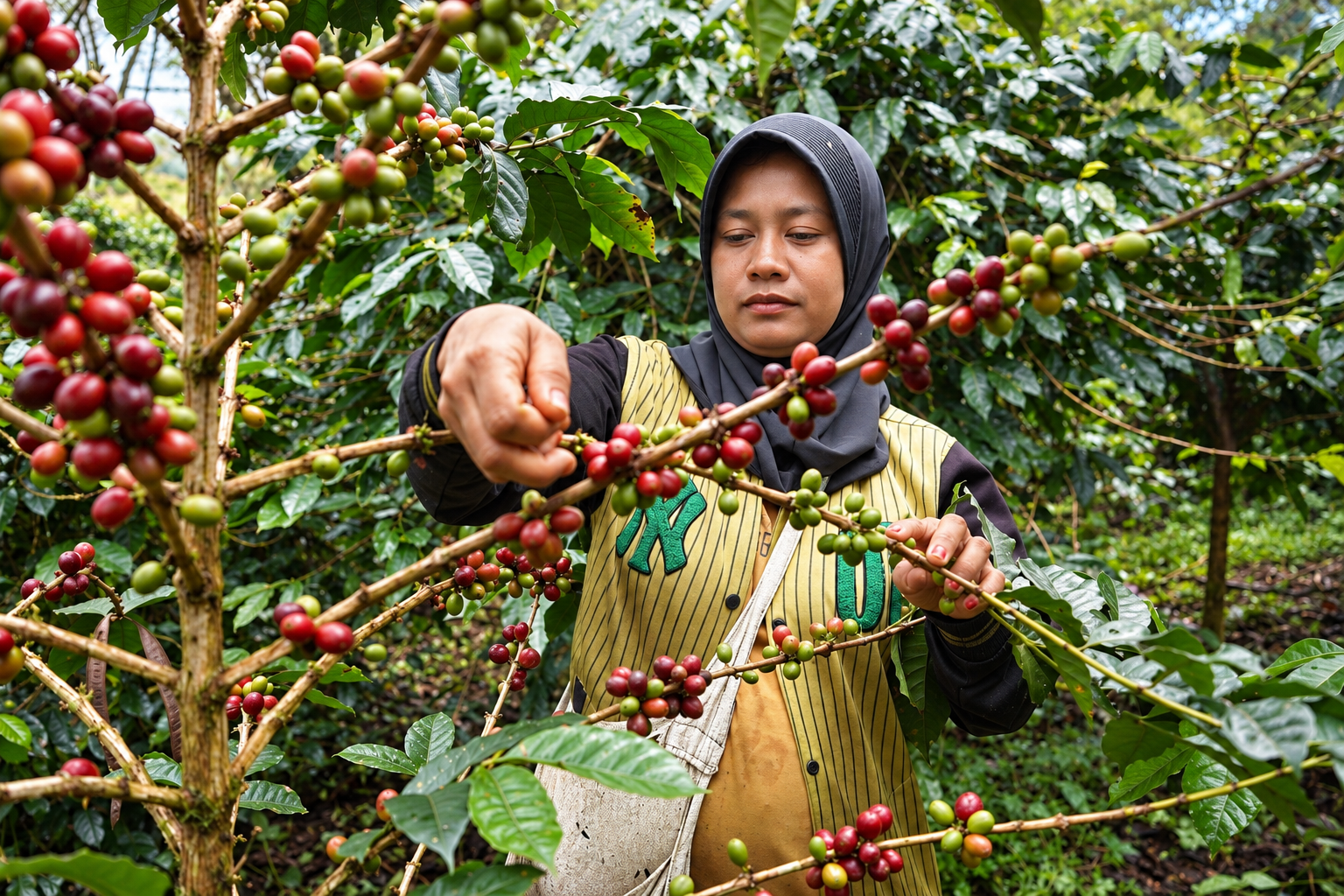
In that sense, the name Gayo represents more than a flavor profile. It represents origin, traceability, reputation, and the collective work behind the coffee.
What Makes Gayo Special?
A coffee’s character begins long before it reaches the roaster.
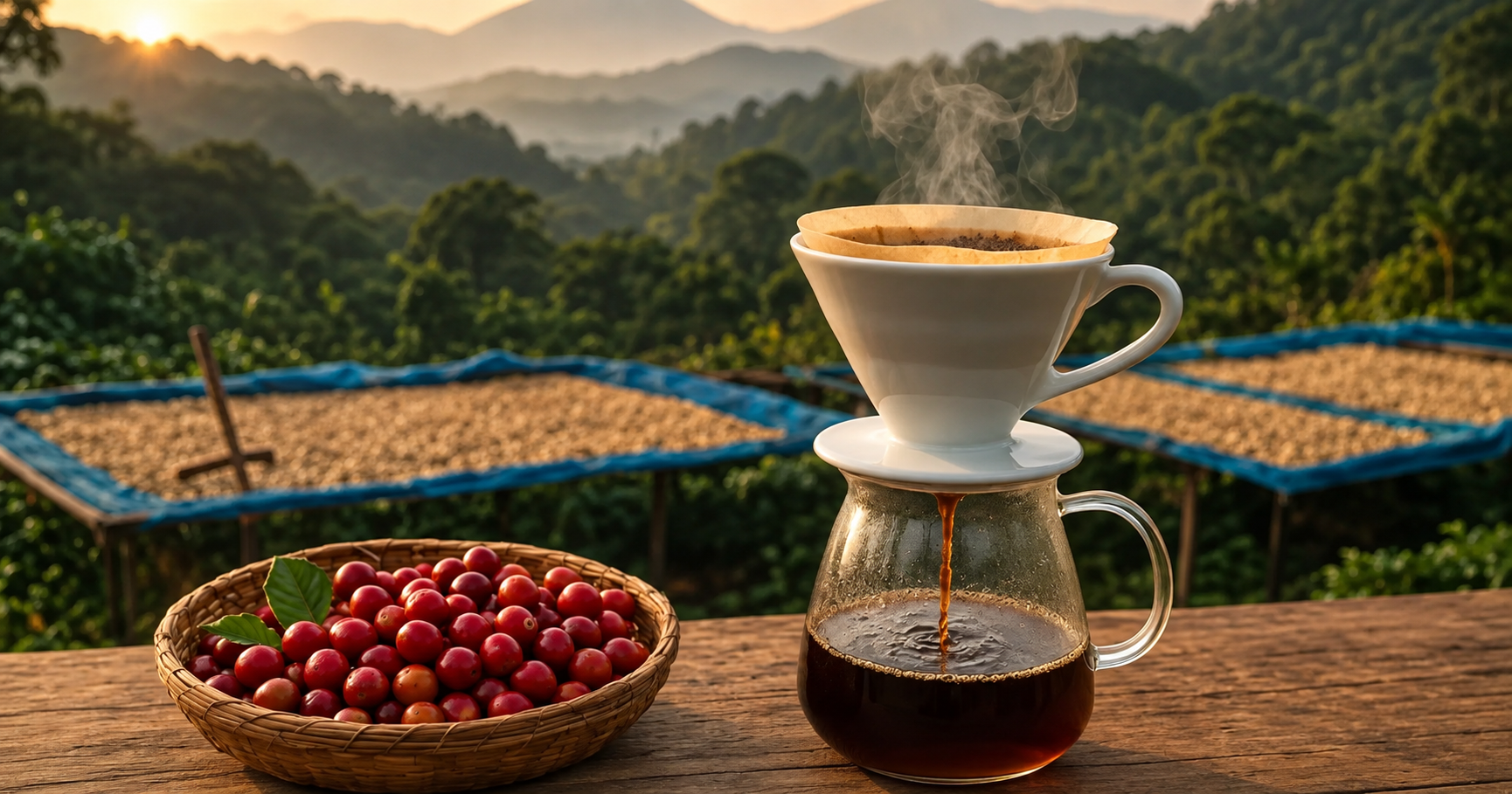
For Gayo, the highland environment provides an important foundation, but the final cup is also shaped by what happens after the coffee cherries are harvested including processing, selection, drying, roasting, and brewing.
This is why two coffees can come from the same broad country and still express very different personalities.
Gayo is often appreciated by coffee drinkers for its distinctive character and complexity, but rather than reducing it to a single tasting note, it is more useful to think of Gayo as a reflection of its origin: a coffee shaped by the highlands of Aceh and the people who cultivate it.
The Indonesian government itself describes Gayo as one of the country’s internationally recognized specialty coffees, alongside origins such as Mandheling, Toraja, Kintamani, and Flores Bajawa.
From Gayo to Your Cup
At AKARNUSA, the story doesn’t end at the farm.
Our Arabica Gayo begins with an origin that already carries a long history. What follows is about bringing that character closer to the way coffee is enjoyed today carefully selected, thoughtfully processed, and roasted to create a cup that can become part of an everyday ritual.
Because behind every bag of Gayo coffee is more than a bean.
There is a landscape.
There are farmers.
There is a history that began more than a century ago.
And there is a place called Gayo that continues to give Indonesian coffee its own story.
From the highlands of Aceh, to your everyday cup.